
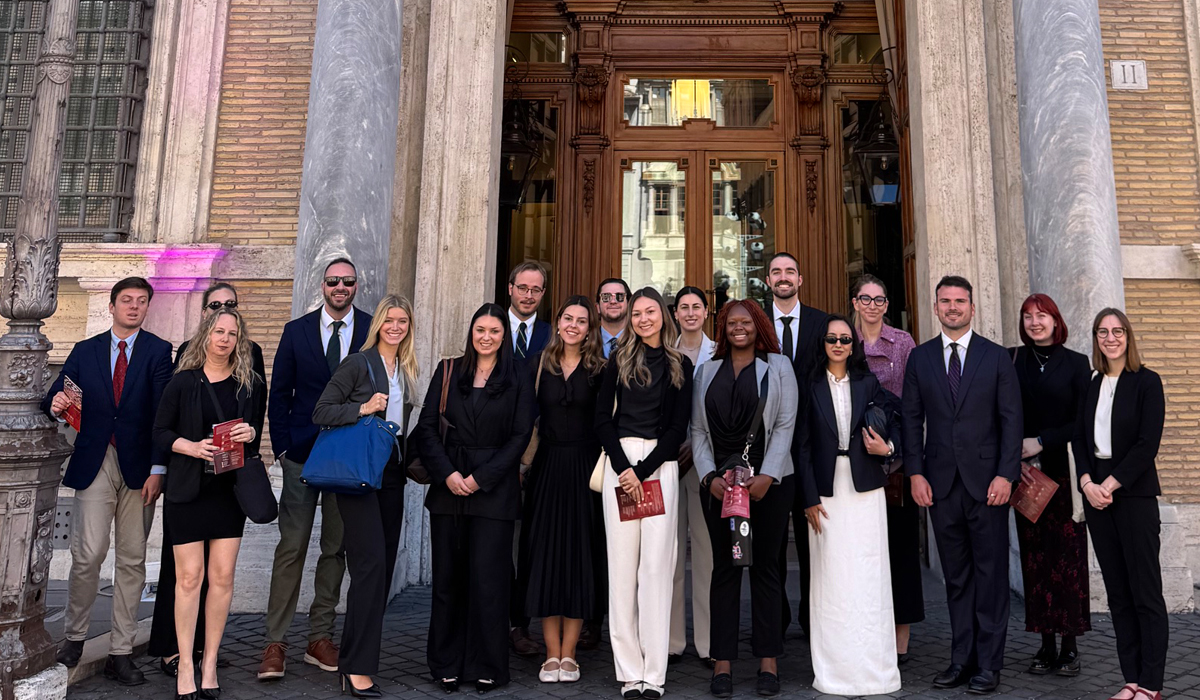
 Catholic Law recently concluded its 2026 International Human Rights Summer Law Program in Rome, Italy, wrapping up an intensive three-week experience that ran from May 17 through June 5. The program was held at the Catholic University's Rome Center on the Janiculum Hill in central Rome, steps from the Vatican, and offered students the opportunity to earn four academic credits by completing two of three rigorous courses.
Professor Natalie Swenson taught Human Rights and the Law of Democracy; Professors Stacy Brustin and Ashley Feasley co-taught Immigration and Human Rights; and Professor Susanna Fischer — who also serves as Director of the Rome Summer Program — led Art, Cultural Property, and Human Rights. Seventeen students took part in the program, including 15 from CUA Law and two from Pace University Law School.
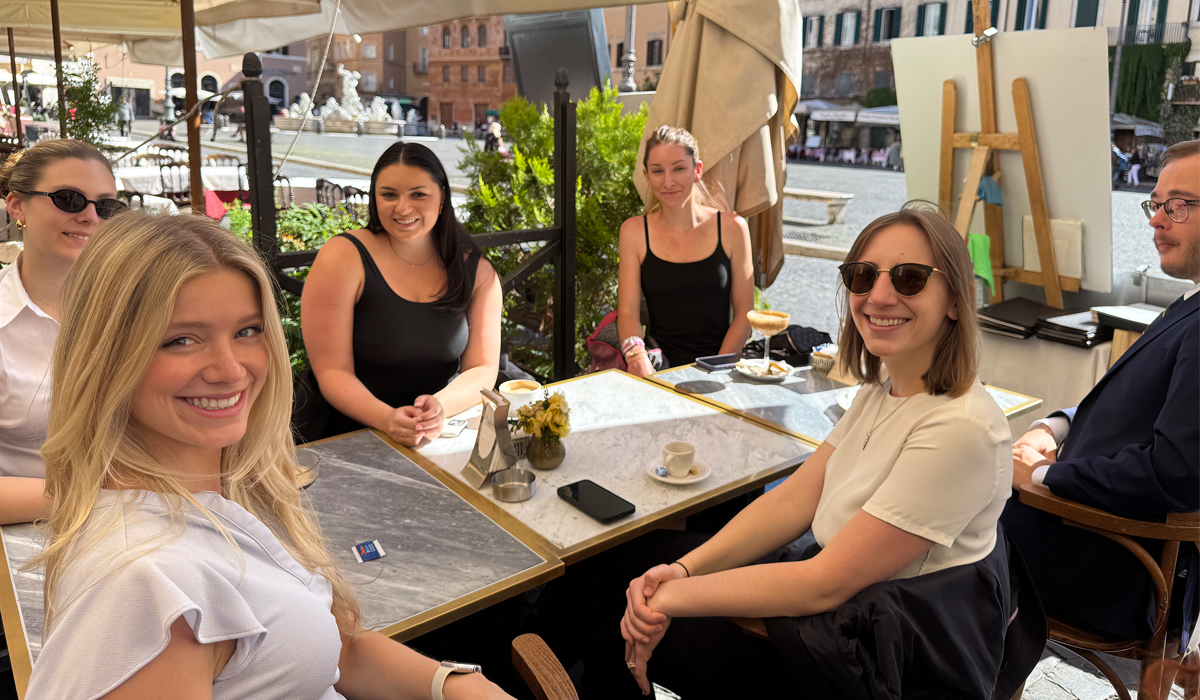 Beyond the classroom, students engaged in a rich series of experiential learning opportunities that brought their coursework to life. They visited the Italian Supreme Court of Cassation and the Italian Senate, gaining direct insight into the country's legal and political institutions. A Papal Audience in St. Peter's Square offered a memorable and meaningful moment, while a visit to the Italian office of the United Nations High Commissioner for Refugees (UNHCR) gave students the chance to meet Enrico Guida, an expert on statelessness, and engage with the real-world challenges of refugee and human rights law.
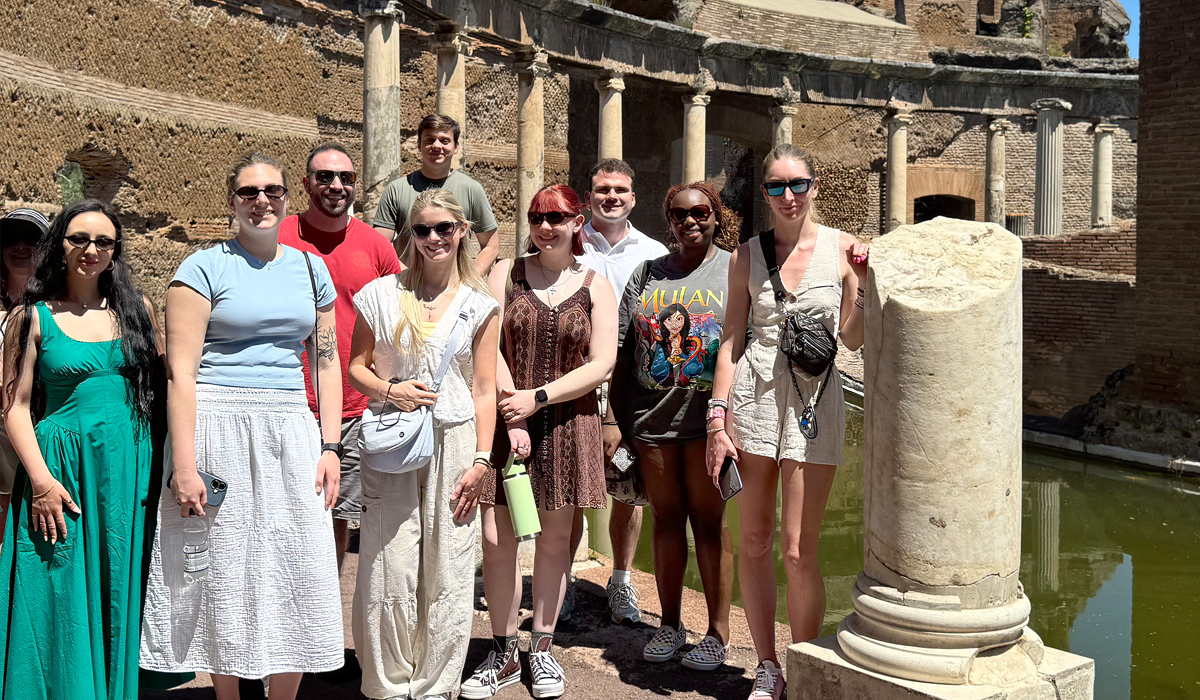 Students also toured the Jewish Museum and the Great Synagogue of Rome, and spent weekends exploring Tivoli's two UNESCO World Heritage Sites — Hadrian's Villa and the Renaissance Villa d'Este — as well as the coastal town of Anzio, where the ruins of Nero's ancient palace meet a beach that also served as a pivotal Allied landing site in World War II. Group outings to the Capitoline Museum, the Museum of the Imperial Forum at Trajan's Market, and shared meals featuring Roman cuisine and traditional Roman-Jewish food in the Jewish Quarter rounded out an extraordinary three weeks.
Programs of this depth and quality depend on dedicated people working behind the scenes, and this one was no exception. Constantia Dedoulis, the Law School's Director of Institutes and Special Programs, played an essential role in making the program possible. Equal credit goes to the outstanding staff at the CUA Rome Center — Director Alessia Noro, Assistant Director Jeanette Dimaano, and Residence Assistant Nino Dimaano — whose care and professionalism helped create a welcoming and well-supported environment for students far from home. Together, faculty, staff, and students made the 2026 Rome Program a compelling example of what legal education looks like when the world becomes the classroom.
Learn more about Catholic Law's Summer Abroad Programs at law.edu/summer.