
At Catholic Law, a powerful collaboration is helping survivors of human trafficking reclaim their lives. Through a joint effort between the Bakhita Initiative for the Study and Disruption of Modern Slavery and the Families and the Law Clinic (FALC), along with a vital partnership with the National Center for Missing and Exploited Children (NCMEC), law students are providing essential legal support. Together, they are helping survivors navigate the complex process of seeking financial restitution, transforming trauma-informed education into life-changing advocacy.
Bethann’s Story: Vulnerability, Grooming, and Exploitation
 To understand the impact of this work, consider the story of Bethann.* She was three months shy of her 15th birthday when she left home—or what was left of it. Her mother was serving time for drug-related charges, and her father had never been present in her life. Bethann and her siblings had been separated and placed into foster care. Bethann went to live with a maternal aunt, while her two younger siblings stayed with her mother’s cousin. Though she was living with family, Bethann struggled. There was never enough food to eat, she had difficulty concentrating in school, and she deeply missed her younger brothers. It was an ordinary Thursday afternoon while Bethann was passing time at the local Jack in the Box that she met Dwayne, a man eight years her senior who would change the trajectory of her young life.
Dwayne wasted no time complimenting Bethann on her dyed hair and spunk. By the time they left the restaurant two hours later, he had her phone number and was driving her around in his sports car. What followed was a quick, weeks-long whirlwind seduction characterized by Bethann dropping out of school, running away from her aunt’s home, and moving in with Dwayne and six of his extended family members in a two-bedroom ranch home.
The shared house provided a roof over Bethann’s head, but space was limited, and she rarely had a bed to sleep in. Dwayne promised they would find an apartment of their own, but money was tight. Six months into their relationship, Dwayne suggested an idea for how they could earn more income and independence. He had heard of an online service that connected lonely people with what he called “ companionship,” and he told Bethann that she would provide “good company.” He would post the ads, he said, and all she had to do was show up. Money would be flowing, he promised, and they would be able to live the life of her dreams.
How Backpage Built a Profitable Exploitation Pipeline
 The year was 2012, and advertisements for "erotic services" were exploding on Backpage, an online ad service designed to compete with Craigslist. However, whereas Craigslist had acted to shut down its prostitution ads by 2010, Backpage doubled-down on ways to market and promote this business. Backpage executives developed tools for crafting erotic ad postings to avoid law enforcement detection while still profiting from the ads and maintaining plausible deniability. Backpage also established a reciprocal link program where buyers could post reviews of services received through ads on the site, even naming specific women.
By 2018, Backpage founders had netted over $500 million, laundering the money through offshore shell companies and facilitating the sexual exploitation of thousands of young women, men, and children trafficked on their platform. In short, it had become an open-air market to buy children and women for sex.
In April 2018, the U.S. Department of Justice seized Backpage assets and charged its founders with conspiracy to facilitate prostitution and money laundering. Some executives pleaded guilty, and others were found guilty after a trial. The Department of Justice also maintained $200 million in seized funds and made those funds available for distribution to survivors through the Backpage Remission Project.
Catholic Law’s Backpage Remission Project Partnership
In the spring of 2026, Catholic Law Professor Mary Graw Leary, Director of the Bakhita Initiative for the Study and Disruption of Modern Slavery, connected CCLS and FALC Director Erin M. Scheick with Yiota Souras, Chief Legal Officer of NCMEC. Souras, who is also an adjunct professor at Catholic Law teaching a popular course on the legal issues of child exploitation, created a nationwide program to connect survivors of sex trafficking on Backpage with lawyers and legal clinics.
 These survivors needed assistance navigating the Backpage Remission process and submitting applications for restitution. Over the course of the semester, Catholic Law students Rachael Phillips (3L), Emily Hutchinson (3L), Gabriella Knox (2L), and Afshan Shabbir (2L) met with three different survivors who had each been trafficked through Backpage. The law students worked diligently not only to learn their clients' stories but also to find ways to document the abuse and exploitation they endured years earlier, as well as the physical and mental health consequences they still carry.
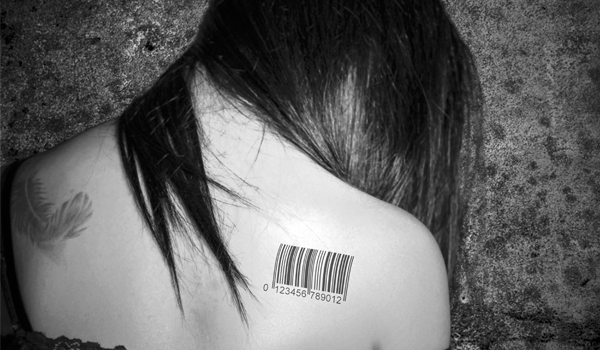
Bethann spent more than two years being trafficked on Backpage, flying from Arizona to Alaska, to Virginia, to Colorado, to Hawaii, and every state in between where Dwayne trafficked her to men for sex. She was just a child. Dwayne controlled Bethann through violence, drugs, and alcohol—Xanax, Percocet, anything to take the edge off. He also branded her with tattoos, including a dollar sign with Dwayne’s initials on her chest, permanently marking her as his property.
Bethann was still a minor when she was arrested for vagrancy in 2015. Following her arrest, the police located a missing persons report filed after Bethann left home in 2012, and she was eventually returned to her aunt. During that period, Dwayne overdosed and died. While the chain that had bound her to him seemingly disappeared, he left deep trauma and injury in his wake.
Though Bethann was finally free from Dwayne’s control, her life since 2015 has remained marked by numerous challenges. She struggles with the physical and psychological effects of the trafficking, and the experience of being trafficked by an intimate partner shook her faith in herself and her trust in others. It has been difficult to hold down a job, and she processes the trauma from her experience daily. Submitting a Backpage Remission Project petition is just one step in her journey to healing—one that she hopes will provide some financial compensation for the medical and therapy bills, tattoo removal, and lost wages she endured because of her trafficking history.
Student Advocacy Through Trauma-Informed Legal Support
FALC students were well-positioned to support Backpage survivors like Bethann. Each of the four students who worked on this project had completed a semester of study regarding intimate partner violence trauma and the ways advocates can support survivors involved in the legal system through trauma-informed practice.
Second-year Catholic Law student Gabriella Knox remarked, “[W]orking on the Backpage Remission Project gave me firsthand exposure to advocacy work that affected victims of sex trafficking. Assisting victims through the remission process showed me how meaningful legal support can be during difficult situations.”
 It can be incredibly difficult to unpack a client’s history, as survivors - because of the trauma experienced - do not typically recount their traumatic history with perfect temporal accuracy. By working slowly and patiently, and revisiting a survivor’s account over the course of representation, the students were able to write a detailed affidavit for each client and identify sources of evidence that could be used to support their applications.
Emily Hutchinson, a graduating third-year student, noted, “I am extremely proud to have worked with a survivor of human trafficking to submit her petition for restitution through the Backpage Remission Project. I received support and training through FALC and our community partner, NCMEC, for a project that closely aligns with the mission and ethos of Catholic Law generally and Columbus Community Legal Services specifically. I hope the clinic can continue to serve as a vehicle for similar collaborative and meaningful projects in the future.”
FALC Director Erin Scheick was grateful for the opportunity to support survivors while collaborating with Professor Graw Leary and NCMEC. She reflected, “In our Clinic’s work with survivors of gender-based violence, rarely are clients able to seek financial restitution for the very real harms they endured. Working with the students and survivors through the Backpage Remission Project provided one small way in which we could secure a concrete benefit for survivors—and hopefully support their healing along the way.”
*Bethann is a fictional client representing a composite of survivor stories that FALC students represented.