
When Joe Nazzaro, Class of 2026, looks back on the path that led him to Catholic Law, he is quick to admit that law school was not always part of the plan. In fact, for years, it felt out of reach.
“For much of my life law school had seemed like a very interesting proposition, but for whatever reason had just seemed unattainable in my mind,” he said. “Growing up and even in college I didn’t have a single lawyer in my family or that I was around with any frequency, so the whole concept of law school was entirely unfamiliar to me.”
That changed during the fall of his senior year at The Catholic University of America (CUA), when he began to think more seriously about what came next. As he researched the kinds of careers that most interested him, a pattern began to emerge. “Any position that I considered to be a ‘dream job,’ particularly being the general manager of a professional sports team, were very frequently filled by people with law degrees,” he said. The more he explored the idea, the more certain he became that law school offered the kind of challenge, opportunity, and long-term impact he wanted in a career. “Even though I had no clue what a career in law would hold for me, whatever I ended up doing would be exciting and impactful, and that’s all I could really ask for in a career.”
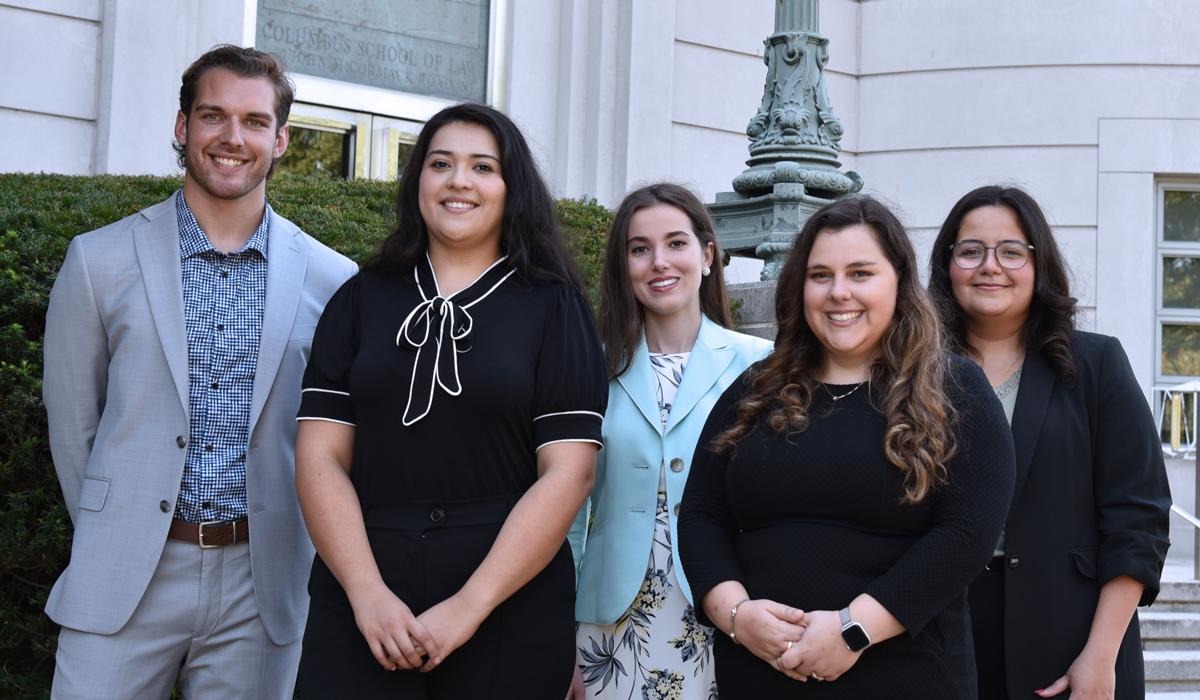 For Nazzaro, choosing Catholic Law was both a practical and personal decision. After attending CUA as an undergraduate, he had built strong roots in Washington, D.C., and found a true sense of belonging in the University community. “I had really come to fall in love with living in DC, being a part of the CUA community, and the roots that I had built here,” he said. While he considered other options, he suspected he would remain at CUA—and one experience made that decision unmistakably clear.
“That was further re-affirmed when I attended the law school’s Admitted Students Day and was absolutely blown away by the community that existed within the law school, the gravitas that the building itself exuded, and how impressive and well-spoken Dean Payne and all the professors I listened to that day were,” Nazzaro said. “From that day onward I had full confidence that Catholic Law was the place for me to develop into a legal professional.”
Gaining Real-World Experience
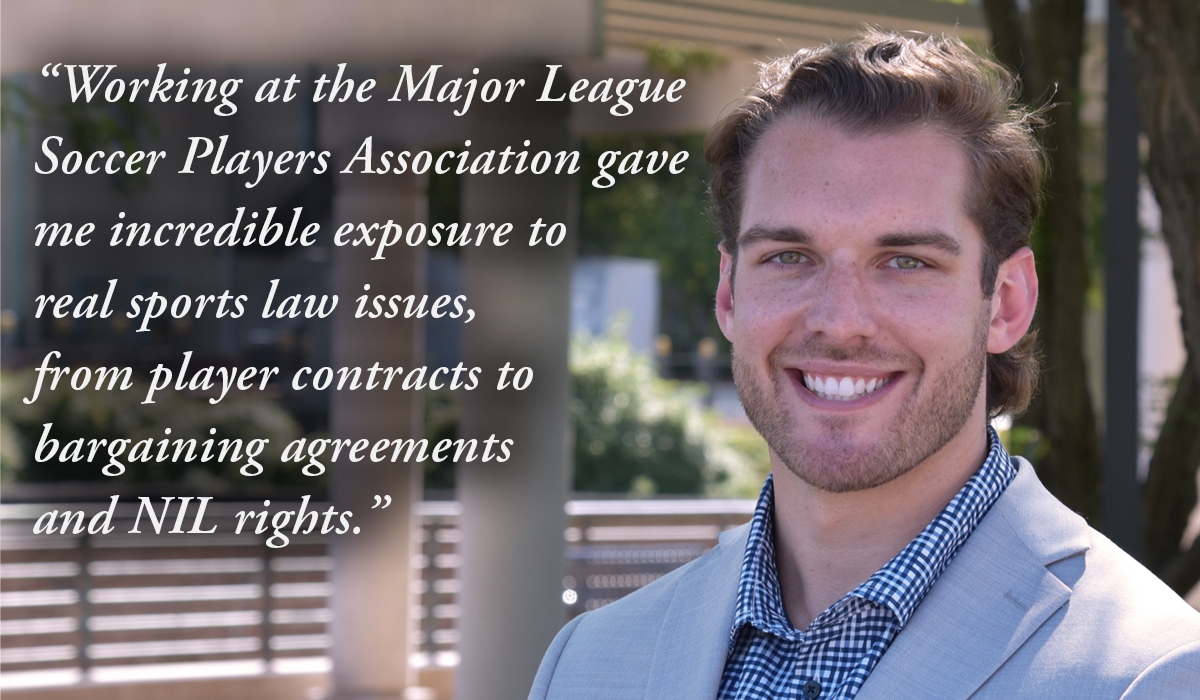
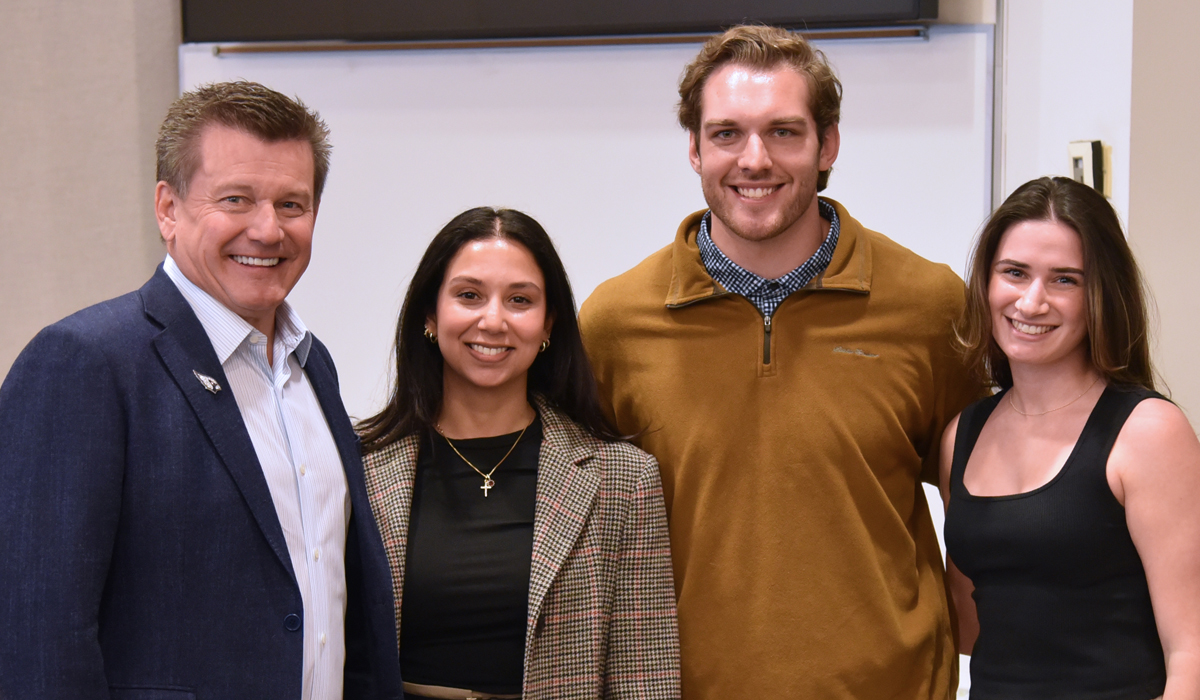 That confidence was reinforced by the breadth of hands-on experiences he gained during law school. After his 1L year, Nazzaro secured a position as a law clerk with the Major League Soccer Players Association, the labor union representing players in the nation’s top soccer league. Reflecting on that pivotal opportunity, Joe shares, “Working at the MLSPA gave me incredible exposure to real sports law issues, from player contracts to bargaining agreements and NIL rights. It was a chance to make an immediate impact and see how legal principles play out in a high-stakes environment.” What began as a summer role grew into a major part of his law school experience, as he remained with the MLSPA through the following summers and academic semesters.
Later, he transitioned to Gordon Rees Scully Mansukhani, where he joined the firm as a law clerk in its commercial litigation practice—a move that, as Joe shares, "allowed me to get real-world experience and dive deeper into the complexities of litigation while preparing for the next stage of my legal career." At the same time, his final semester brought another milestone: participation in the inaugural Law and Entrepreneurship Clinic at Catholic Law.
The Law and Entrepreneurship Clinic
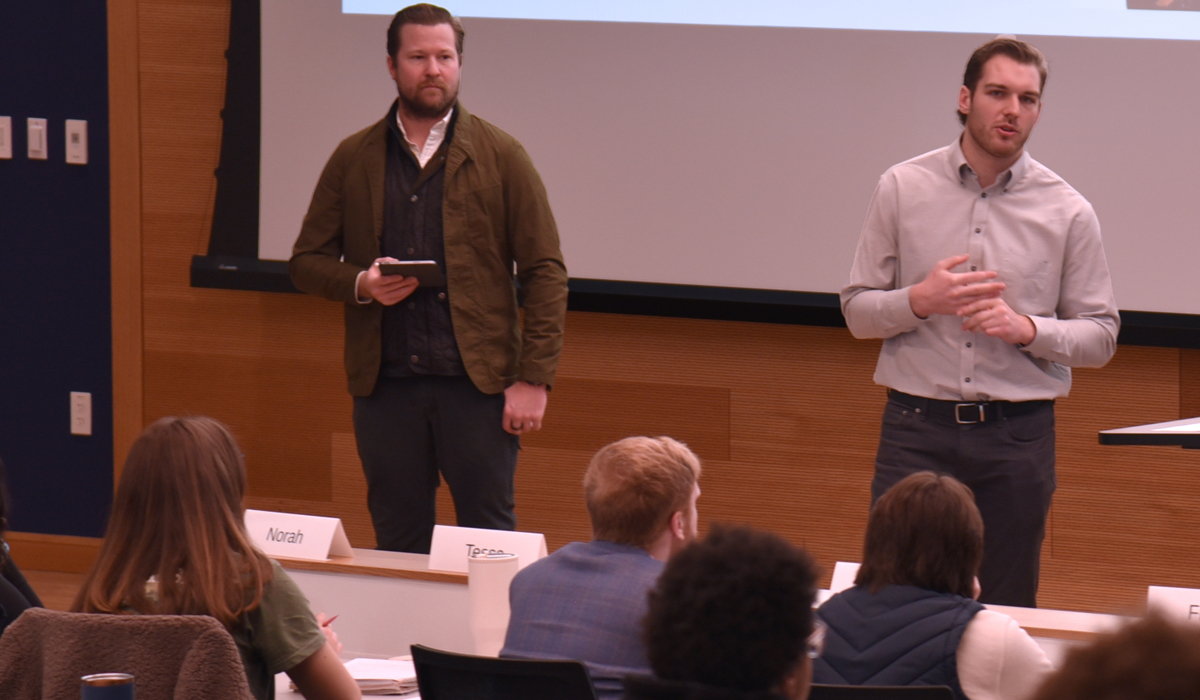 That clinic became one of the defining experiences of his time at the law school. “Having had the opportunity to be a part of the inaugural semester of the Law and Entrepreneurship Clinic was an extremely rewarding experience for me,” he said. “Getting hands-on experience doing transactional work was something that I had been longing to do during law school, and the Clinic was the perfect avenue for me to do just that.” Through the clinic, he worked with a recent CUA alumnus who was developing a medical device company, helping him navigate the legal issues that arise in the earliest stages of building a business.
The experience was especially meaningful because it connected Nazzaro’s legal training with his undergraduate background in entrepreneurship—and with a personal connection as well. “This experience was particularly fulfilling for me because my client was a former football teammate of mine at CUA, and it was amazing to get to help him in his pursuit of establishing a medical device company while developing my own legal abilities at the same time,” he said.
Scholarship and Community
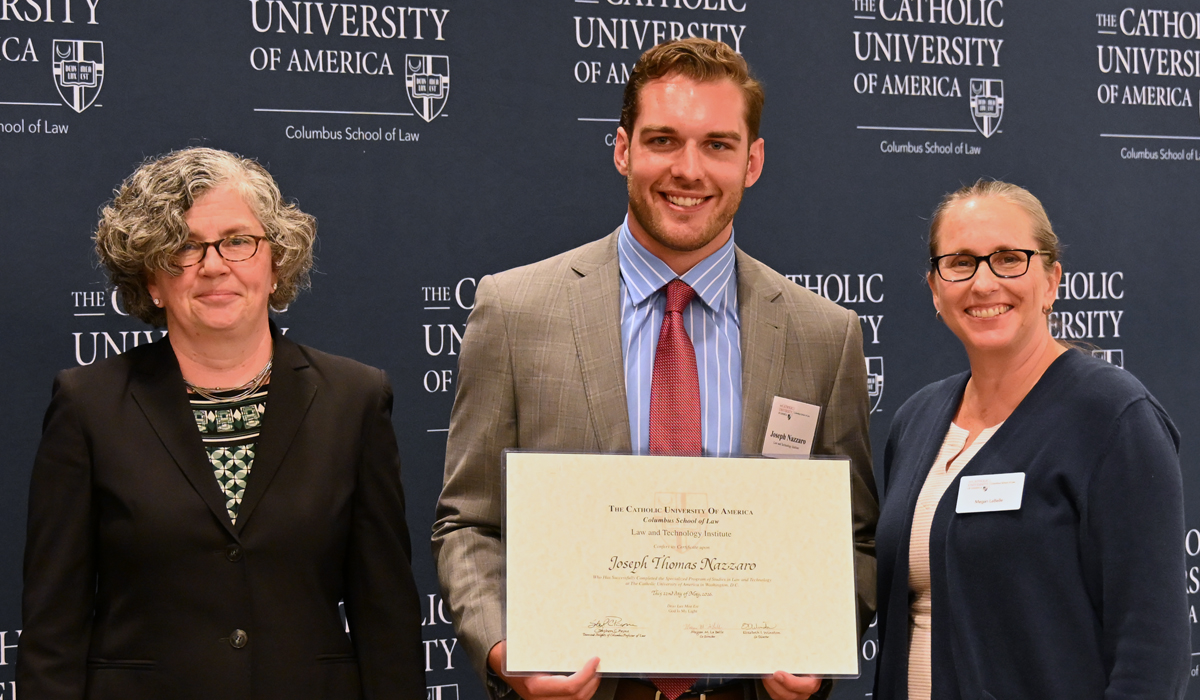 Another highlight was his work on Catholic University Law Review during his second and third years. For Nazzaro, Law Review offered both intellectual rigor and a strong sense of community. He described writing a scholarly article and presenting it as part of the Student Scholar Series as his “proudest professional feat to date.” He also took genuine pride in the editorial side of the work, including the painstaking process of mastering Bluebook citation rules.
Just as important, Law Review gave him a place to belong. “The Law Review suite became my home at the law school,” he said, “as it’s where I did all my work, most of my socializing, and enjoyed countless coffees and snacks while grinding away at all hours of the day (and night).” It is a memory that captures both the intensity and camaraderie of his time at Catholic Law.
Looking Ahead: Post-Graduation Plans and Lasting Reflections
Now, after graduation, Nazzaro is focused on what comes next. This summer, he will study for and sit for the D.C. Bar exam. After that, he plans to return to Gordon Rees Scully Mansukhani, first as a law clerk and eventually as an associate in the firm’s commercial litigation practice.
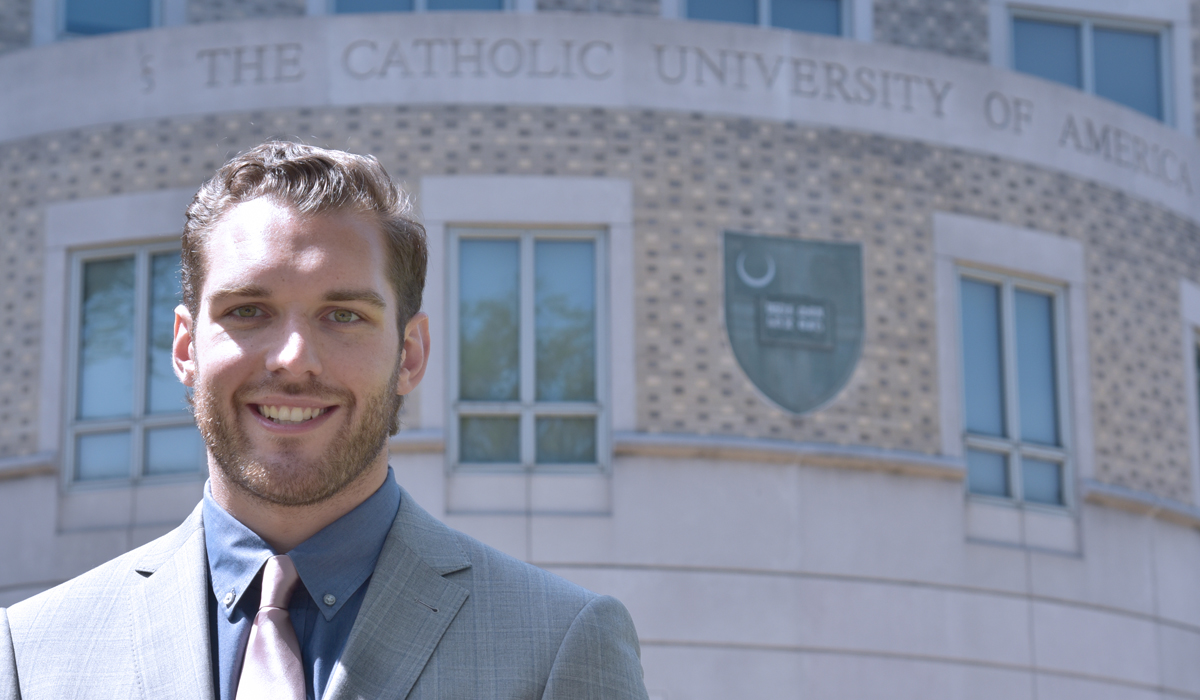 As he reflects on his Catholic Law experience from the vantage point of a graduate, Nazzaro points to the school’s location, network, and support system as the qualities that stand out most. “Being in DC for school in itself is such a fantastic opportunity, as there are so many interesting jobs, people, and events that you have access to, and Catholic does a fantastic job of putting students in a position to take full advantage of this,” he said. He also praised the school’s steady stream of guest speakers and the strength of the alumni network, noting that Catholic Law graduates are consistently eager to help current students succeed.
Above all, he emphasized the support he received across the institution. “The administration at the school is truly top notch,” he said, citing Student Life, the Office of Career and Professional Development, the Registrar’s Office, Financial Aid, Advancement, and others. “As someone who knew nothing about law school or the legal world whatsoever coming into school, I could not be more appreciative of the assistance and guidance I got from every single member of the administration during my time here.”
For Nazzaro, Catholic Law provided more than a degree. It offered a professional foundation, a community, and a clearer sense of what is possible. What once felt unattainable became the start of a promising legal career—one shaped by curiosity, hard work, and the opportunities he found in Washington and at Catholic Law.