
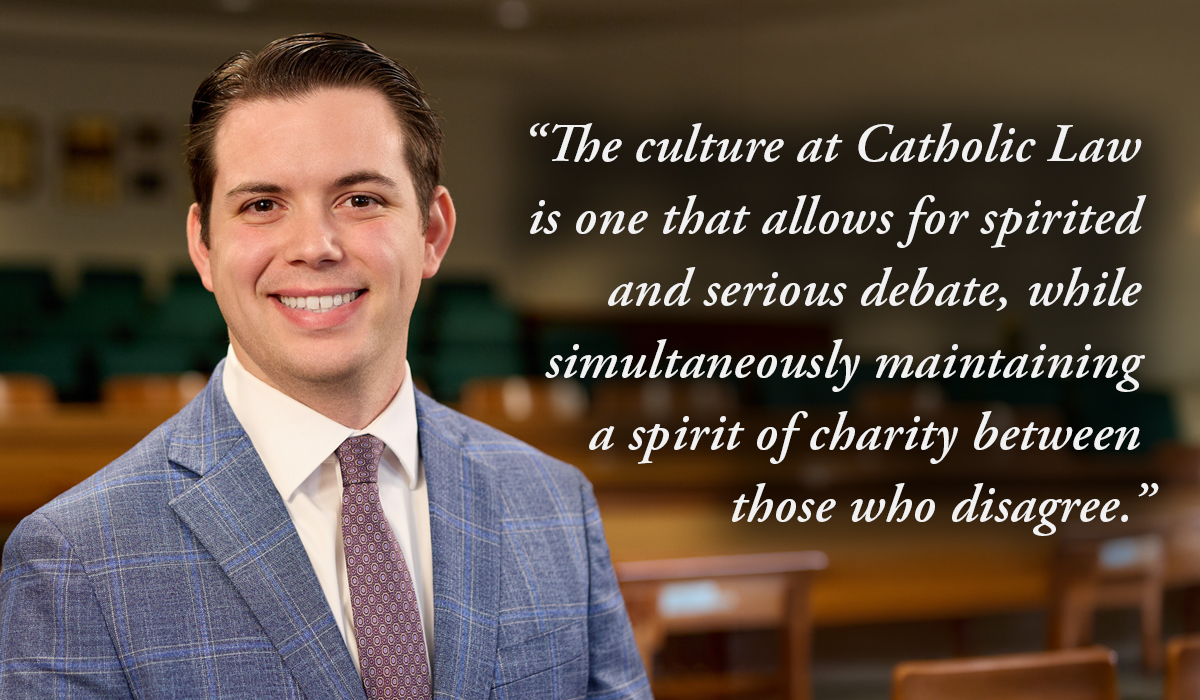
For Alexander Kagan, Class of 2026, the path to law school began long before he ever stepped into a classroom. It started with a deep interest in American history and a lasting fascination with the nation’s founding. That early interest shaped his studies, sharpened his ambitions, and eventually led him to Catholic Law, where he found both the intellectual challenge and practical experience to pursue his calling.
“Growing up, I always had a love of American history and was always fascinated by the Founding era,” Kagan said. That passion led him to study political theory and American politics in college. But it was a focused academic experience during his junior year that brought the law into clearer view. “I took a three-week intensive course on the 14th Amendment, which was really my first window into the legal field and constitutional law,” he said. “Taking that course made me realize I had a passion for the American Constitution, and I decided that if I ever pursued graduate studies, it would be to study law and to focus on constitutional law issues.”
That interest soon became a firm career goal. After college, Kagan spent a year working in a small legal office that focused on religious freedom. The experience confirmed what he had begun to suspect in the classroom. “I decided that law school, and a legal career, were what I wanted to do,” he said. Kagan’s initial decision to attend Catholic Law was shaped in part by place. “I initially chose Catholic Law due to its location in D.C.,” he said. “I had always wanted to live in D.C., and I thought it would be a great opportunity to study law just up the road from the Capitol and the Supreme Court.” For a student drawn to constitutional law and the institutions that shape it, the setting offered obvious appeal.
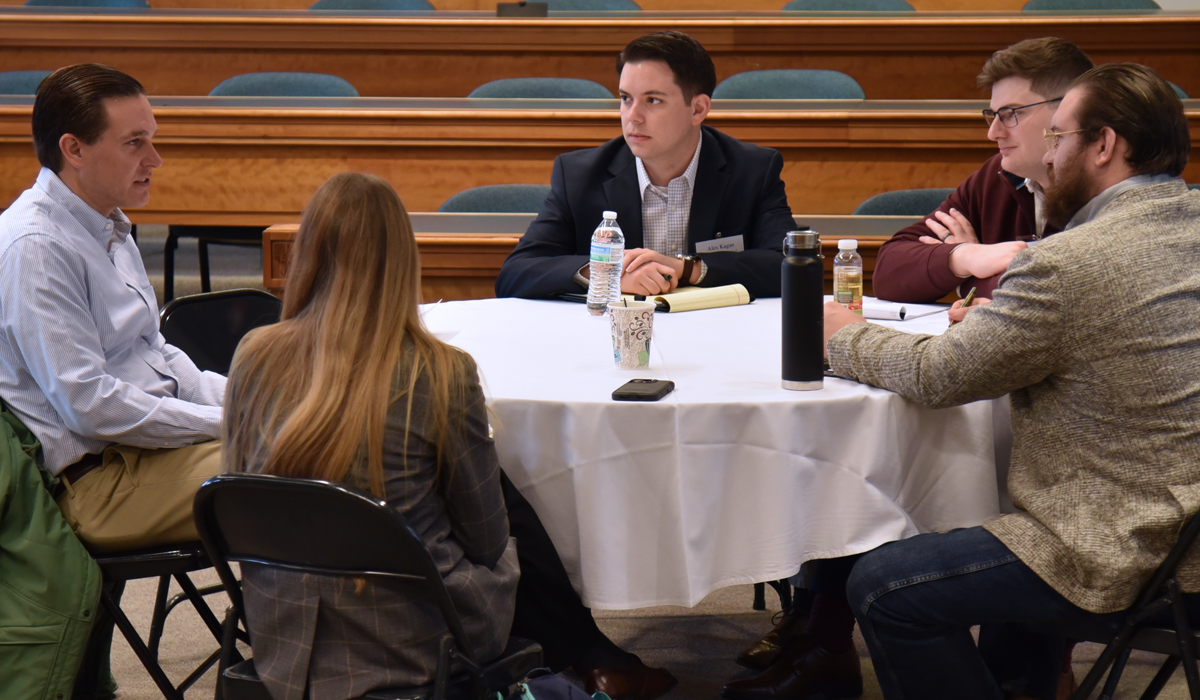 At Catholic Law, that interest quickly turned into meaningful hands-on experience. During the fall of his second year, Kagan externed at the Becket Fund for Religious Liberty, an opportunity closely aligned with his long-term interests. “During my 2L fall I was able to extern at the Becket Fund for Religious Liberty, a dream opportunity for me,” he said. There, he worked on a case that recently reached a major milestone. He noted that he “had the opportunity to work on a case that, just last month, the U.S. Supreme Court decided to hear during next year’s term.”
In his third year, Kagan added another high-level experience to his résumé when he interned for the U.S. Senate Committee on the Judiciary in Chairman Grassley’s Office, where he worked on nominations. One moment stood out in particular. “A highlight of that experience was being able to attend CUA faculty member Judge Jennifer Mascott’s confirmation hearing after working on her nomination beforehand,” he said.
Some of Kagan’s most memorable experiences at Catholic Law came through the chance to engage with members of the judiciary he had long admired. “My favorite moments are likely the opportunities I had to meet Justices Clarence Thomas, another lifelong dream of mine, Brett Kavanaugh, who I was able to have dinner with, and Amy Coney Barrett through programs put on by CIT and the Federalist Society chapter,” he said. Those moments were significant not only because of who he met, but because they reflected the kind of access and programming that helped define his law school experience.
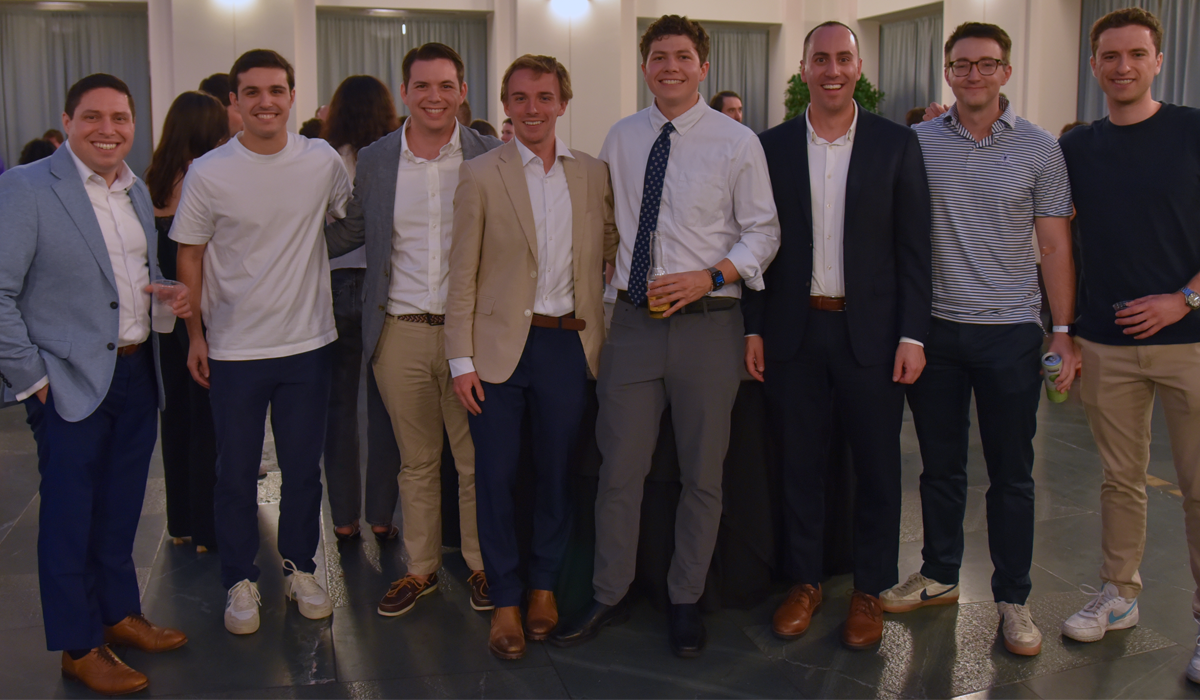 Leadership also became a major part of Kagan’s time on campus. “Leading the Federalist Society this year and helping lead it last year was one of the most rewarding experiences of law school,” he said. The organization gave him both a community and a sense of purpose. “Many of my closest friends from Catholic were made in the Federalist Society, and I am grateful to have been able to lead a chapter that is rapidly growing in reputation nationally.”
Alongside those professional and extracurricular highlights, one course left a lasting academic impression. “I’d be remiss if I did not mention taking Prof. Alicea’s American Constitutional Theory seminar,” Kagan said. “It is undoubtedly the best class I’ve taken at any level of schooling.”
After graduation, Kagan plans to continue building on the constitutional law foundation he has developed at Catholic Law. “After graduation, I will be taking the D.C. Bar before moving to Fort Worth, Texas, to clerk for Hon. Reed C. O’Connor, Chief Judge of the U.S. District Court for the Northern District of Texas,” he said. Looking beyond that clerkship, he hopes to remain connected to the field that first inspired him. “After clerking, I hope to pursue a career path that allows me to continue to work on constitutional law issues to some degree.”
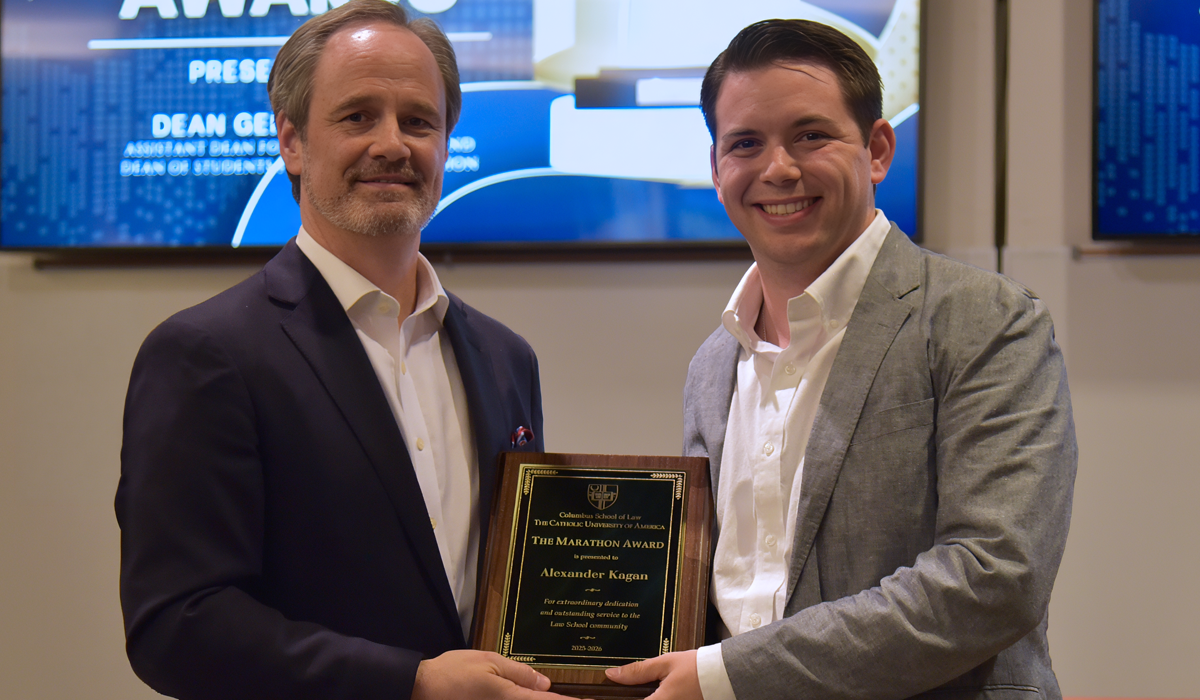 Now, with his Catholic Law experience nearly complete, Kagan sees the school in a deeper and more fully formed way than when he first arrived. What stands out most to him is how fully the school’s mission shapes the student experience. “Catholic Law truly lives up to the mission of what a Catholic law school ought to look like,” he said. “The Church’s tradition of pursuing the truth is embodied by the mission of this law school.”
For Kagan, that mission comes to life through the faculty and the culture they help create. “Through its tremendously talented and incredibly supportive faculty, a student at Catholic Law is challenged to wrestle with deep questions of what the law is and how it ought to operate in our society,” he said. Just as important, he added, is the school’s openness to serious intellectual exchange. “These debates are not one-sided. The culture at Catholic Law is one that allows for spirited and serious debate, while simultaneously maintaining a spirit of charity between those who disagree.”