
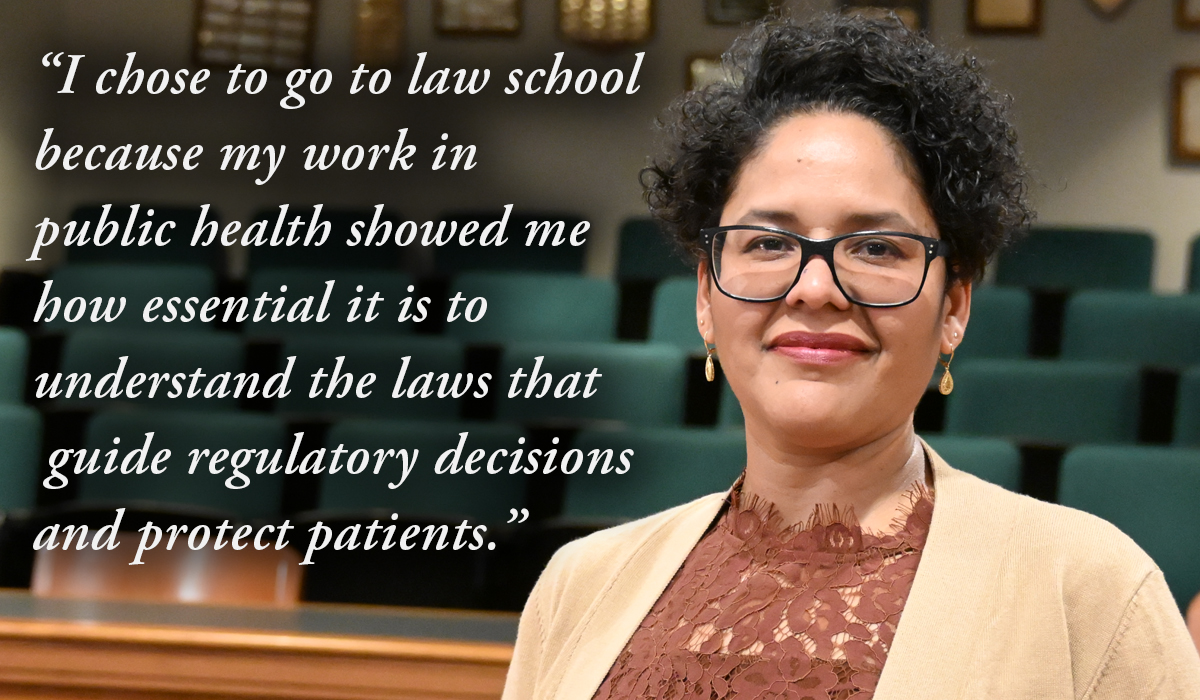
For Ileana Elder, a graduate of the Class of 2026, the decision to pursue a legal education grew directly from her professional roots. During her prior work at the U.S. Food and Drug Administration (FDA), she witnessed firsthand the critical intersection of science, patient safety, and regulation.
"I chose to go to law school because my work in public health showed me how essential it is to understand the laws that guide regulatory decisions and protect patients," Elder shared. Through her daily work, she realized that "stronger legal and policy tools can help address gaps that affect real people, especially when it comes to product safety."
Balancing Ambition and Family
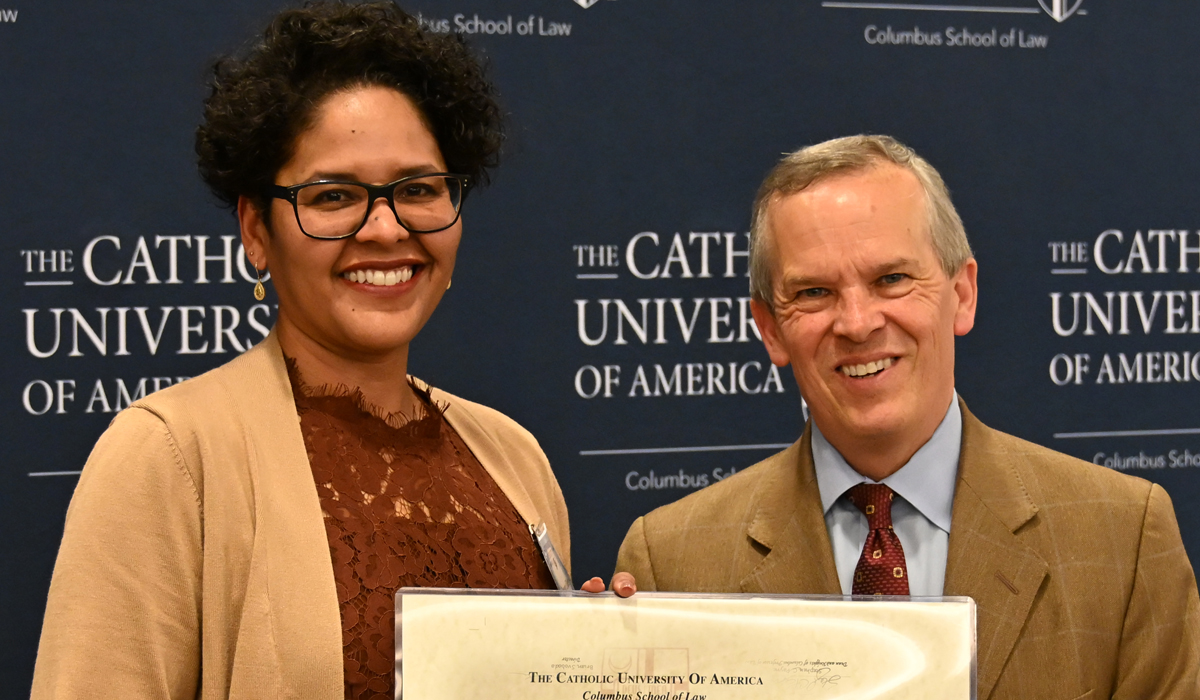 Elder initially postponed her legal education to raise her children and advance her career before enrolling at Catholic Law in 2022. Transitioning back to the classroom required a rapid and focused adjustment. "I learned to balance work, family, and academics, and to build stronger time-management and organizational skills very quickly," she said.
When selecting an institution, Catholic Law stood out for its rigorous academic foundation and strategic location in Washington, D.C. The school’s Law and Public Policy (LPP) Program perfectly aligned with her goals, while the strong Bar passage rate provided necessary confidence. "Catholic Law offered the combination of mission, location, and opportunity that I was looking for," she noted.
Embracing Hands-On Advocacy
 During her time as a law student, Elder prioritized practical, hands-on service to vulnerable communities. A defining moment was her participation in the Immigration and Refugee Advocacy Clinic’s spring break service trip. Working directly with individuals in detention, she assisted with client interviews and helped deliver legal information sessions. The experience taught her "how to communicate effectively across language and cultural barriers," she recalled. She further expanded her public-interest exposure through pro bono work with the CAIR Coalition and the Mid-Atlantic Innocence Project.
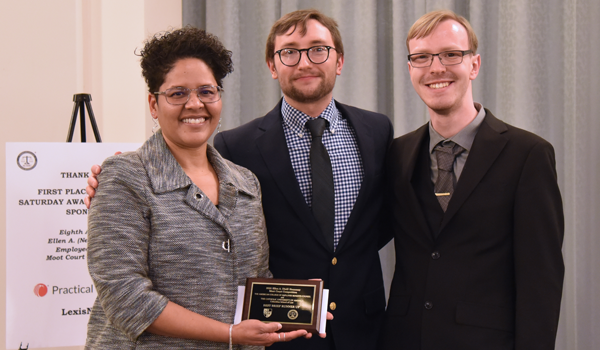
Beyond her clinical and pro bono work, Elder thrived in advocacy settings. Serving in the Moot Court Association became a major highlight of her law school career. Her team earned the Best Brief Runner-Up distinction, an achievement that she said "strengthened my confidence as a legal writer and advocate."
A Retrospective on Catholic Law
 Looking back on her completed journey, Elder emphasized the lasting value of her education and the supportive environment that shaped her development. "Catholic Law stands out to me for its strong academic foundation, supportive faculty, and commitment to experiential learning," she said. "It gave me the opportunity to grow as a writer, advocate, and public-policy thinker. My experiences in Moot Court, the Immigration Clinic, and pro bono service showed how deeply the institution values practical training and public service, and the Law and Public Policy Certificate strengthened my understanding of how law shapes society."
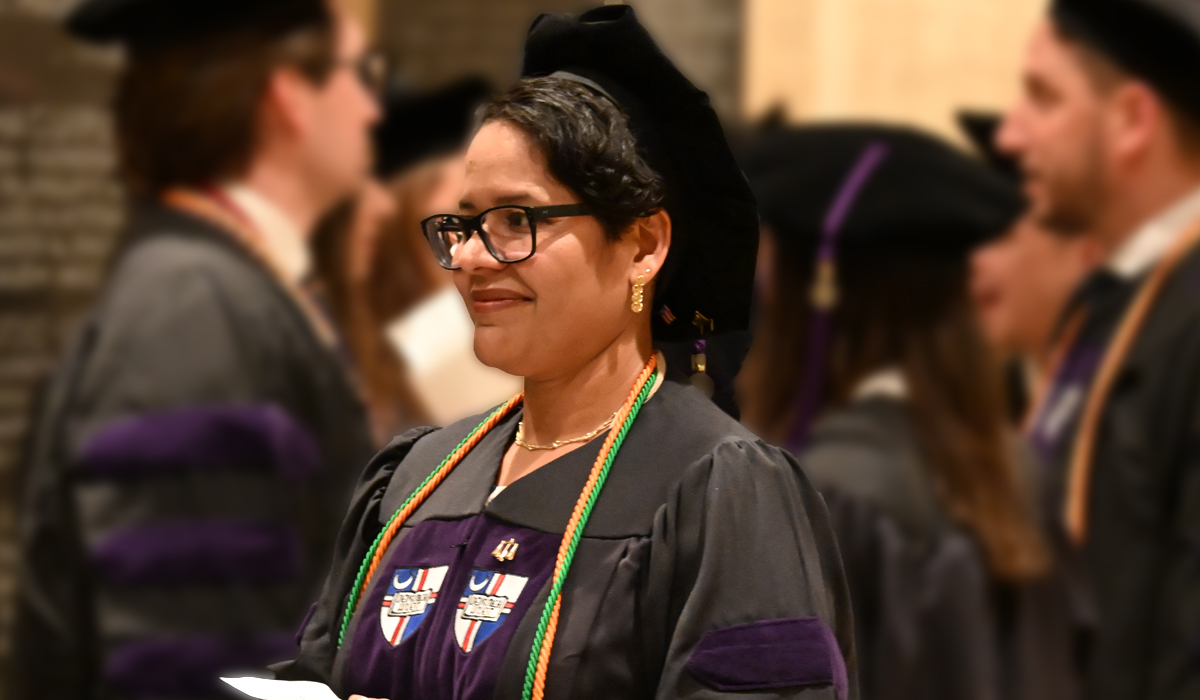 With graduation behind her, Elder now plans to sit for the July 2026 bar exam and return her focus to federal service. "I hope to continue my career in public service by contributing to the mission of the FDA," she explained. "My goal is to apply my legal training to regulatory and compliance work involving medical products. This path allows me to combine my scientific background with my legal education. I look forward to supporting public health through thoughtful, well-grounded legal work."