
Long before Cameron Collins, Class of 2026, stepped into a law school classroom, the path toward law had already begun to take shape.
“I always kind of knew I was going to end up in law school,” Collins said.
That instinct started early. In high school, Collins was drawn to civics, government, and the legal system, building that interest through Government Club and immersive programs such as New Hampshire Youth in Government and Harvard Model Congress. Those experiences offered more than an academic introduction. They placed Collins in rooms that echoed with debate, procedure, and public service, and they made the law feel real.
That interest deepened in college, where Collins studied Political Science and found a lasting connection to constitutional issues. “One of my favorite undergraduate classes was a pre-law course in Constitutional Law,” Collins said. The subject matter stayed with him, not only as an intellectual interest, but as a guide for the kind of work he hoped to pursue.
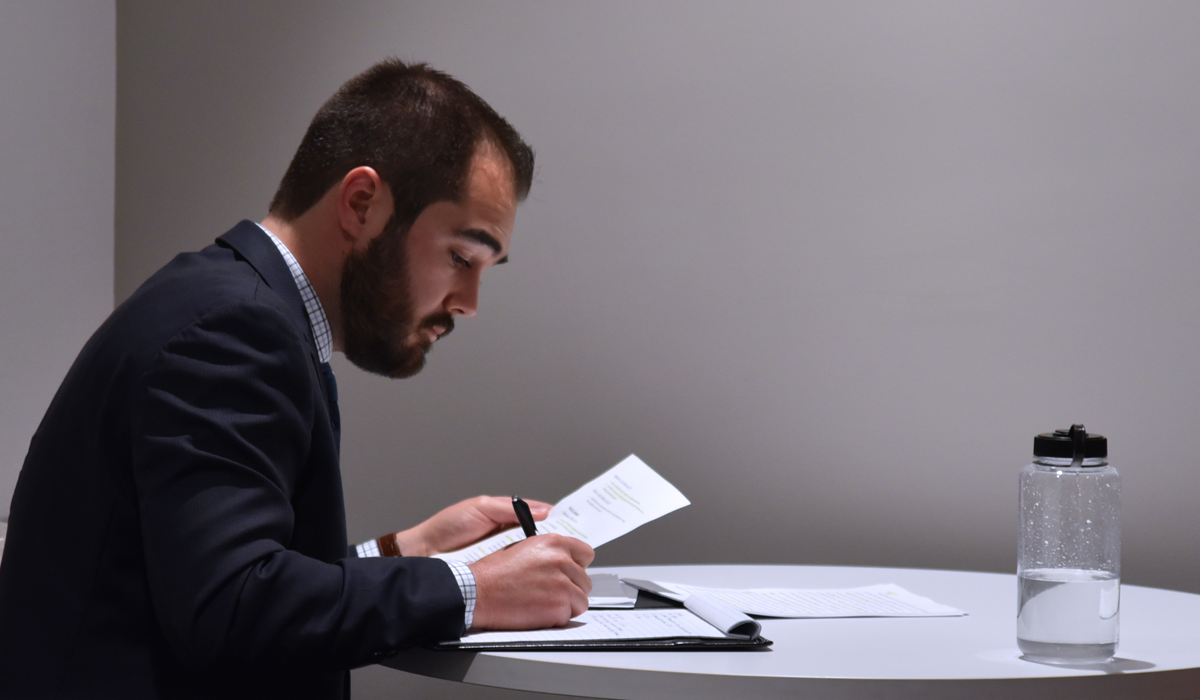 After college, Collins took that interest in public service into the community through a temporary role at the nonprofit Pathways Vermont. There, he helped people experiencing homelessness find, secure, and use government housing vouchers for which they qualified. “I thoroughly enjoyed helping members of my community in a meaningful way,” he said.
The experience was deeply rewarding, but it also sharpened his sense of what he wanted next. Collins later moved into consulting for government contractors in the Washington, D.C., area, gaining professional knowledge and a new vantage point on policy-related work. Still, something was missing. “While this part of my career journey gave me valuable knowledge and experience, it also helped me realize that government contracting and consulting wasn’t really for me,” Collins said. “I missed working both with people, and for them in a meaningful way.”
That realization brought his journey into focus. “It was then that I made the decision to apply to and attend law school,” Collins said, “and it was probably the best career-based decision I have made to date.”
Choosing Catholic Law
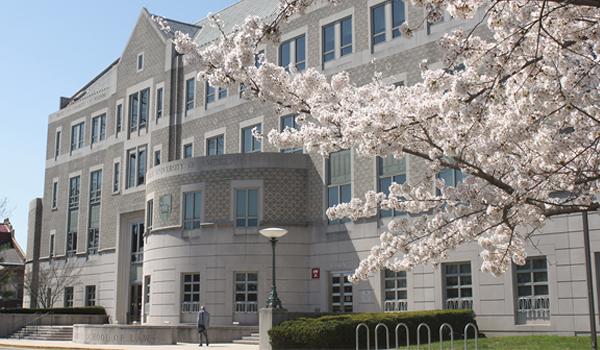 When the time came to choose a law school, Collins was looking for more than a strong academic program. As a first-generation law student, he wanted a place where he could ask honest questions and find genuine support.
He found that at Catholic Law.
“I chose Catholic Law because of its sense of community, and the faculty’s dedication in the success of the student body,” Collins said.
That impression formed even before he enrolled. In April 2023, while weighing admissions offers, Collins reached out with questions about the school and the decision ahead of him. Dean Newell responded with an invitation to meet one-on-one and took time during Easter break to speak with him directly.
“She took time out of her Easter break to set up a one-on-one meeting with me, and answered all of my questions thoroughly and honestly,” Collins said. “As a prospective law student who hadn’t committed to Catholic yet, I felt the sincerity Dean Newell brought to our meeting as well as how invested she was in our conversation.”
For Collins, that moment said something important about the school’s culture. “I figured if this is how the Catholic Law faculty showed up for prospective students, the same must be true for the faculty’s investment in its active students,” he said. “The Catholic Law faculty and community have lived up to, if not beyond this standard ever since.”
Learning the Law by Doing the Work
 At Catholic Law, Collins has paired classroom study with a wide range of practical legal experiences. He completed an externship with the Office of the General Counsel for The Catholic University of America, interned with the intellectual property firm Maier & Maier in Alexandria, and served at the Prince William County Public Defender’s Office.
Each role offered a different view of legal practice. Together, they built the kind of hands-on foundation that helps students test interests, sharpen skills, and grow in confidence.
But one experience stands above the rest.
“Perhaps one of the most valuable and meaningful practical experiences I took part in at Catholic Law was the Prosecution Clinic,” Collins said. Operating in Montgomery County, Maryland, the clinic gave Collins the chance to work closely with an Assistant State’s Attorney. Through the Rule 19 program, he was able to practice law under supervision after completing the required law school credits. It was rigorous, fast-moving, and real.
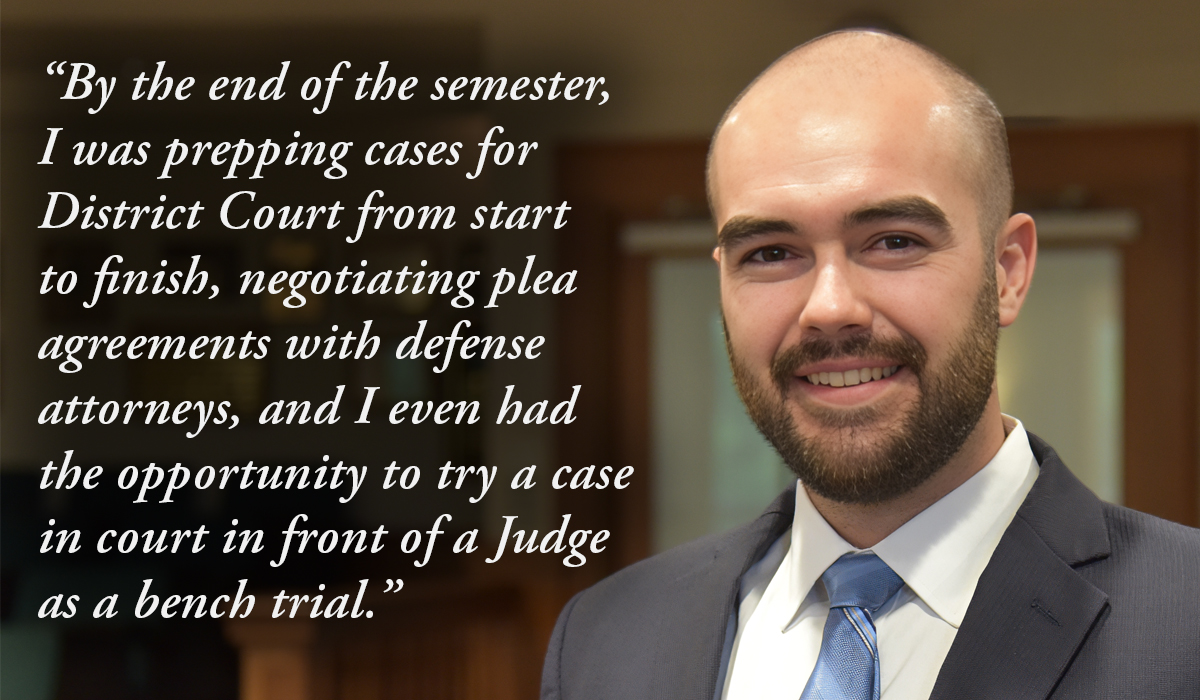
“By the end of the semester, I was prepping cases for District Court from start to finish, negotiating plea agreements with defense attorneys, and I even had the opportunity to try a case in court in front of a Judge as a bench trial,” Collins said.
For a student preparing for a legal career, that kind of courtroom exposure is transformative. It turns doctrine into practice and responsibility into professional growth.
Scholarship, Service, and School Spirit
Collins points to the Prosecution Clinic as a defining part of his time at Catholic Law, but it is far from the only highlight.
“The Prosecution Clinic was definitely a highlight of my time at Catholic Law,” he said. “I also had the honor of writing for and editing the Catholic University Law Review over the past two years.”
That work led to a major academic milestone: the publication of his article, "The Flaws of Bruen and the Principle of the Second Amendment," in Issue 2 of Volume 75 of the Catholic University Law Review. The accomplishment reflects another dimension of the Catholic Law experience—one that challenges students not only to practice law, but also to analyze it, question it, and contribute to legal scholarship.
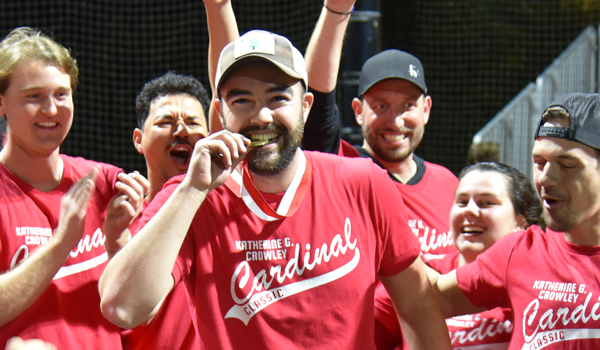 And Collins’ memories of law school are not limited to the classroom, clinic, or journal office.
“Finally, a list of highlights for me at Catholic Law wouldn’t be complete without mention of the Cardinal Classic and the Class of ’26’s undefeated record,” he said.
That note of pride captures something else that has shaped his experience: a community built not just on academic ambition, but on friendship, shared effort, and joy.
Looking Ahead
After graduation, Collins will continue building on the foundation he has developed at Catholic Law through a prestigious judicial clerkship.
“Over the next year, I will be clerking for Associate Judge Judith Pipe of the Superior Court of the District of Columbia,” he said.
It is a fitting next step for a student whose path has been shaped by civic engagement, service, hands-on learning, and a clear commitment to meaningful legal work.
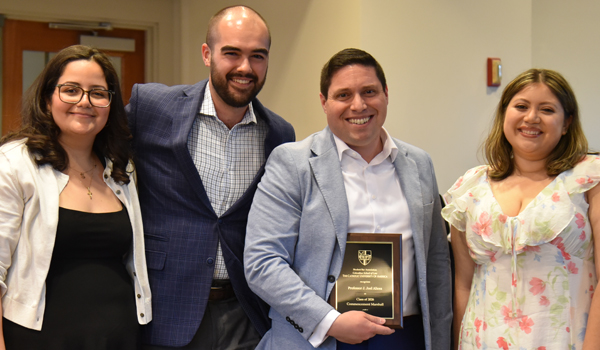 Looking back, Collins says the reason to choose Catholic Law now is the same reason he chose it in the first place. “The sense of community at Catholic Law, as well as the dedication of both the faculty to the student body and the students to one another, is unparalleled.”
Law school presents significant challenges—demanding reading, rigorous standards, and high expectations. Yet Collins’ experience demonstrates how the right environment can transform those challenges into opportunities for growth.
“While law school pushed me to my limits, it was the supportive community and dedicated faculty at Catholic that turned those demanding years into an experience that was not only achievable, but genuinely rewarding.”
For Collins, that has made all the difference.