
The Catholic University Law Review, in collaboration with the Pacific Legal Foundation, convened its annual symposium, drawing legal minds from across the nation to explore the theme: Searching for Constitutional Limits on Environmental & Natural Resources Law. The event, held on Friday, February 13, 2026, brought together scholars, practitioners, and policymakers for a day of thought-provoking discussions and debates.
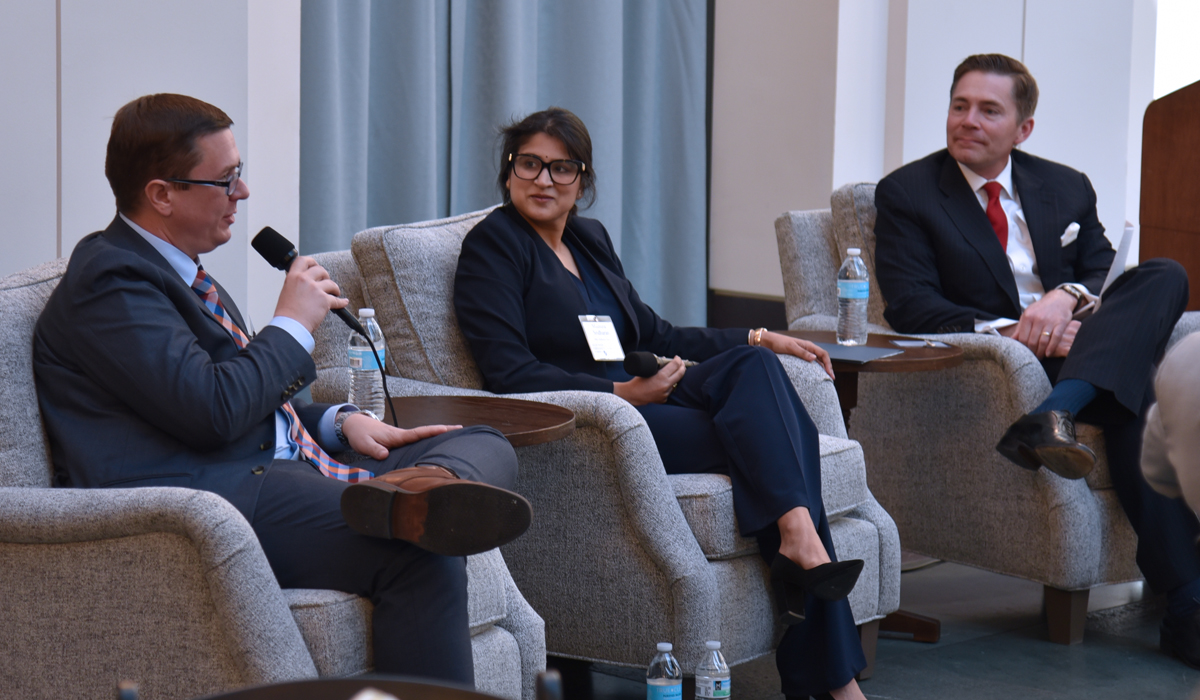 The symposium began with a warm welcome from Atticus Keane, the current Editor-in Chief of the Law Review, and Professor Derek Webb, the faculty sponsor. Their opening remarks set the stage for a day dedicated to examining the intersection of constitutional law and environmental policy, emphasizing the importance of these discussions in shaping the future of legal frameworks. The keynote address, delivered over lunch, delved into the pivotal role of state solicitors general in navigating environmental and natural resources law. Moderated by Damien Schiff of the Pacific Legal Foundation, the session featured insights from Mathura Sridharan, Ohio’s Solicitor General, and Michael Williams, West Virginia’s Solicitor General. Together, they unpacked the challenges and opportunities faced by states in balancing environmental stewardship with constitutional constraints, offering a glimpse into the complexities of their roles.
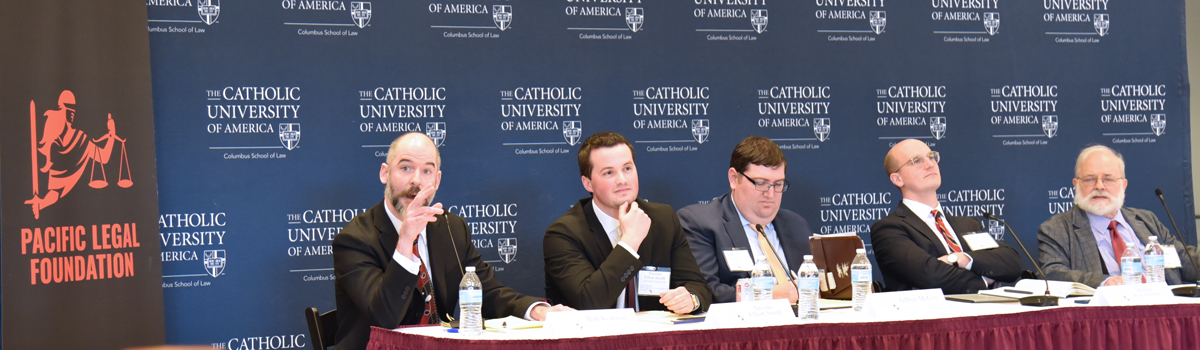
From L to R: Will Yeatman, Nicolas Elliot-Smith, Jeffrey McCoy, Michael Buschbacher, and Loren Smith
Following a brief intermission, the first panel of the day tackled the topic of implied and express limits on legislatures. The Honorable Loren Smith of the United States Court of Federal Claims moderated a dynamic group of legal experts, including Michael Buschbacher of Boyden Gray PLLC, Jeffrey McCoy of the Pacific Legal Foundation, Will Yeatman of the George Washington’s Regulatory Studies Center, and Nicolas Elliot-Smith of Sullivan & Cromwell LLP. The panel engaged in a spirited discussion, exploring the boundaries of legislative authority, dissecting case law and constitutional principles that shape the legislative process in environmental regulation.
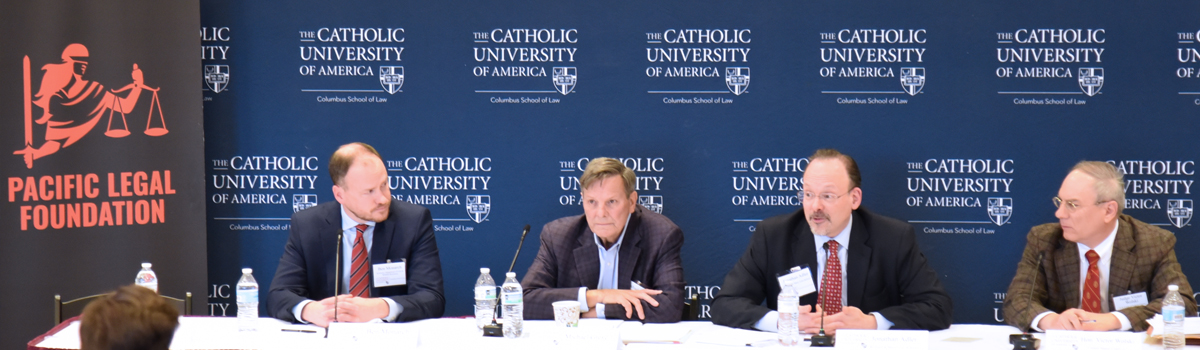
From L to R: Ben Monarch, Michael Greve, Jonathan Adler, and Victor Wolski (Ron Opsahl joined via zoom)
After another short break, the second panel turned its focus to federalism, a cornerstone of American governance. Moderated by the Honorable Victor Wolski of the United States Court of Federal Claims, the panel featured Jonathan Adler of William & Mary Law School, Michael Greve of Antonin Scalia Law School, Ben Monarch of the Kentucky Department of Fish & Wildlife Resources, and Ron Opsahl of the Alaska Department of Law. Together, they examined the delicate balance of power between federal and state governments in managing natural resources, highlighting the tensions and synergies that arise in this complex legal landscape. The day concluded with a closing reception, where attendees had the opportunity to reflect on the discussions, network with peers, and continue the conversations sparked by the panels.
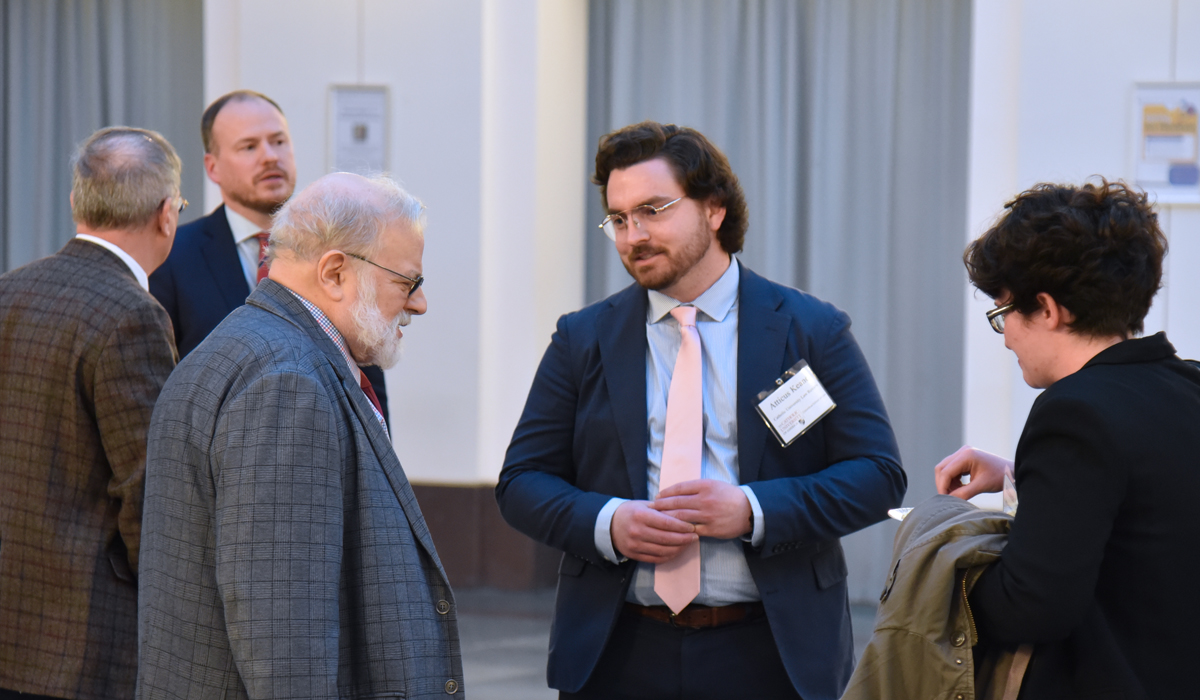 Atticus Keane shared, “working with Pacific Legal Foundation was an incredible opportunity and allowed for a wonderful symposium tackling the intersection of constitutional and environmental law.” He added, “thank you to everyone at both the Columbus School of Law and Pacific Legal Foundation for making this year’s symposium such a success.”
About Pacific Legal Foundation
Pacific Legal Foundation is a public interest law firm that defends Americans’ liberties when threatened by government overreach and abuse. Every year, the organization represents hundreds of Americans, free of charge, who seek to improve their lives but are stymied by government. By giving them their day in court, Pacific Legal Foundation helps vindicate their rights and sets lasting precedents to protect everyone else.
Fighting for freedom since 1973, Pacific Legal Foundation has brought 20 cases to the Supreme Court and achieved 18 victories, including landmark cases in property rights and administrative law.