
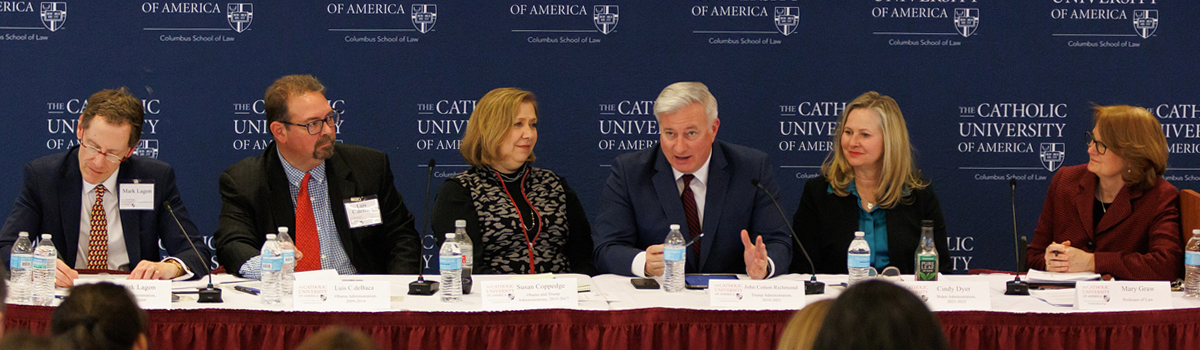
From L to R: Mark Lagon, Luis C.deBaca, Susan Coppedge, John Richmond, Cindy Dyer, and Mary Graw Leary
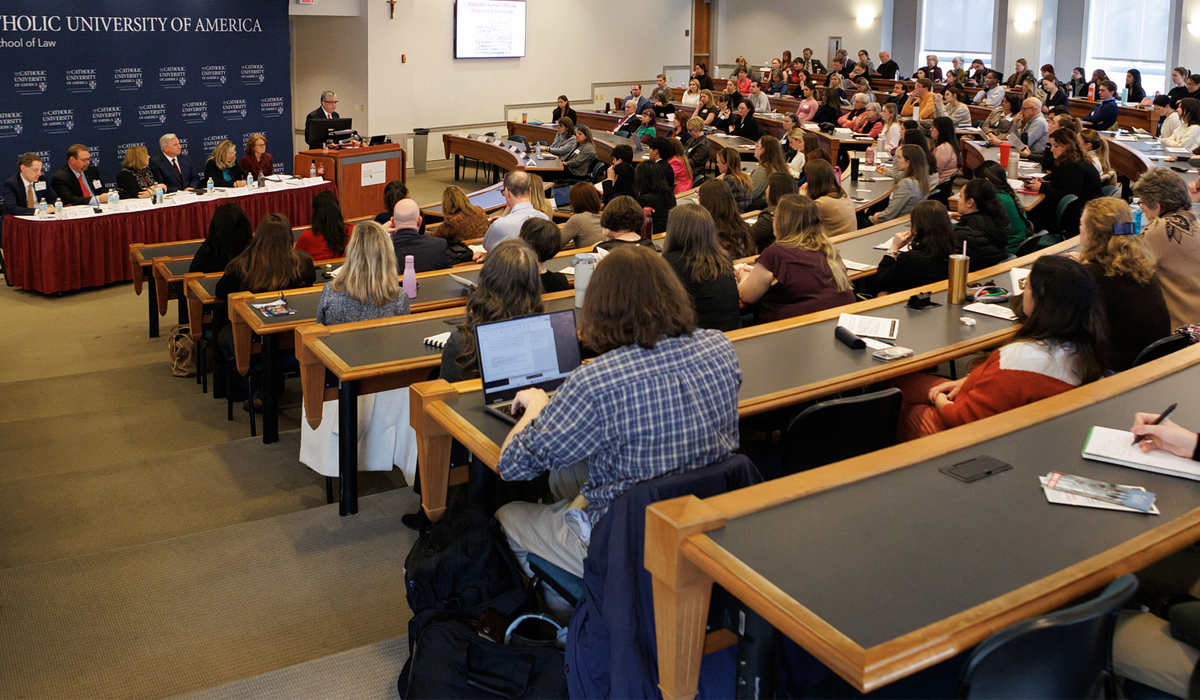 On January 22, Catholic Law hosted a landmark bipartisan panel discussion titled "The Global Anti-Trafficking Movement at a Crossroads.” The event convened five former U.S. Ambassadors at Large for Human Trafficking, spanning administrations from Bush to Biden, to address the critical challenges facing America’s leadership in combating modern slavery.
The distinguished panelists included:
- Mark Lagon (Bush Administration, 2007–2009), now Chief Policy Officer at the Global Fund to Fight AIDS, Tuberculosis, and Malaria.
- Luis C.deBaca (Obama Administration, 2009–2014), a professor at the University of Michigan Law School.
- Susan Coppedge (Obama and Trump Administrations, 2015–2017), Executive Director of Georgia Legal Services.
- John Richmond (Trump Administration, 2018–2021), Chief Impact Officer of Atlas Free.
- Cindy Dyer (Biden Administration, 2023–2025), Chief Program Officer for the McCain Institute.
Moderated by Catholic Law's Professor Mary Graw Leary, the panel commemorated Human Trafficking Awareness Month and the 25th anniversary of the Trafficking Victims Protection Act (TVPA). The discussion underscored the U.S.'s historic role as a global leader in anti-trafficking efforts, driven by the State Department’s Office to Monitor and Combat Trafficking in Persons.
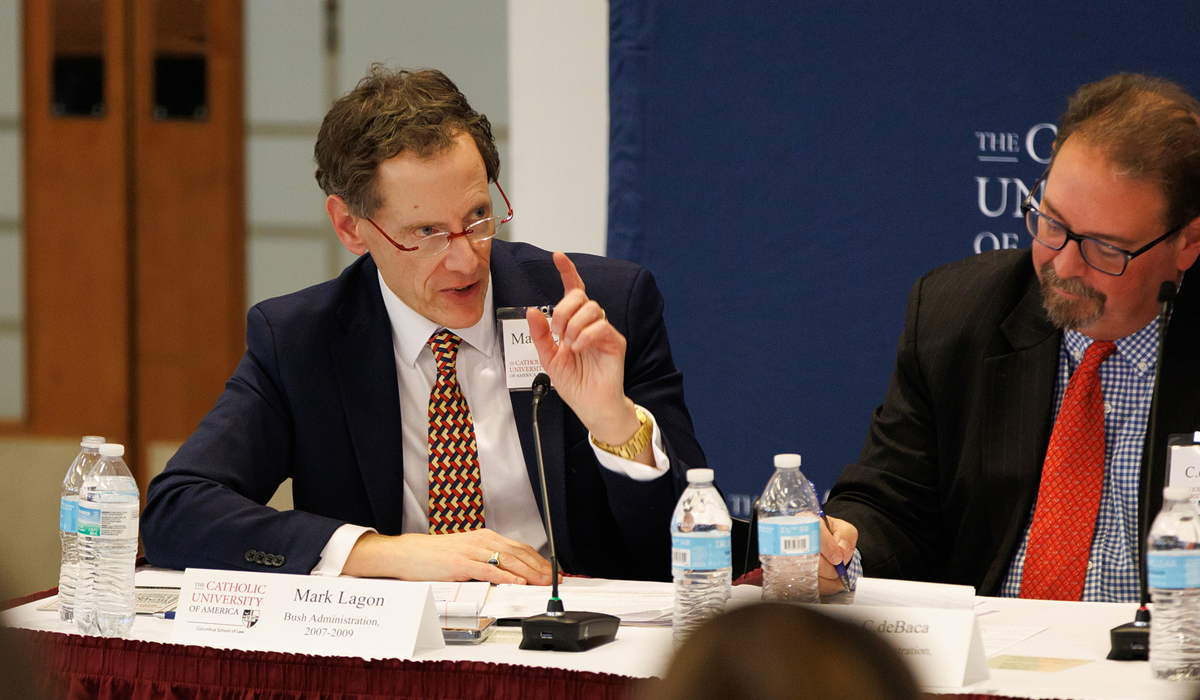 The panelists voiced deep concerns about recent policy changes that threaten to reverse 25 years of progress. These include a 70% reduction in the office’s staff, the elimination of the office as a standalone program and its merger into a larger bureau, the absence of an appointed ambassador who speaks for the President and reports directly to the Secretary of State, and the termination of 69 international programs targeting child labor, forced labor, and human trafficking. They also commented up the unintended consequence of diverting case agents from the FBI and HIS to immigration investigations that has led to a plummeting of investigations and prosecutions. They warned that these cuts, as well as the unhelpful rhetoric of incorrectly equating immigration enforcement with combatting human trafficking, undermine the U.S.'s ability to protect vulnerable populations and maintain its global leadership in the fight against modern slavery.
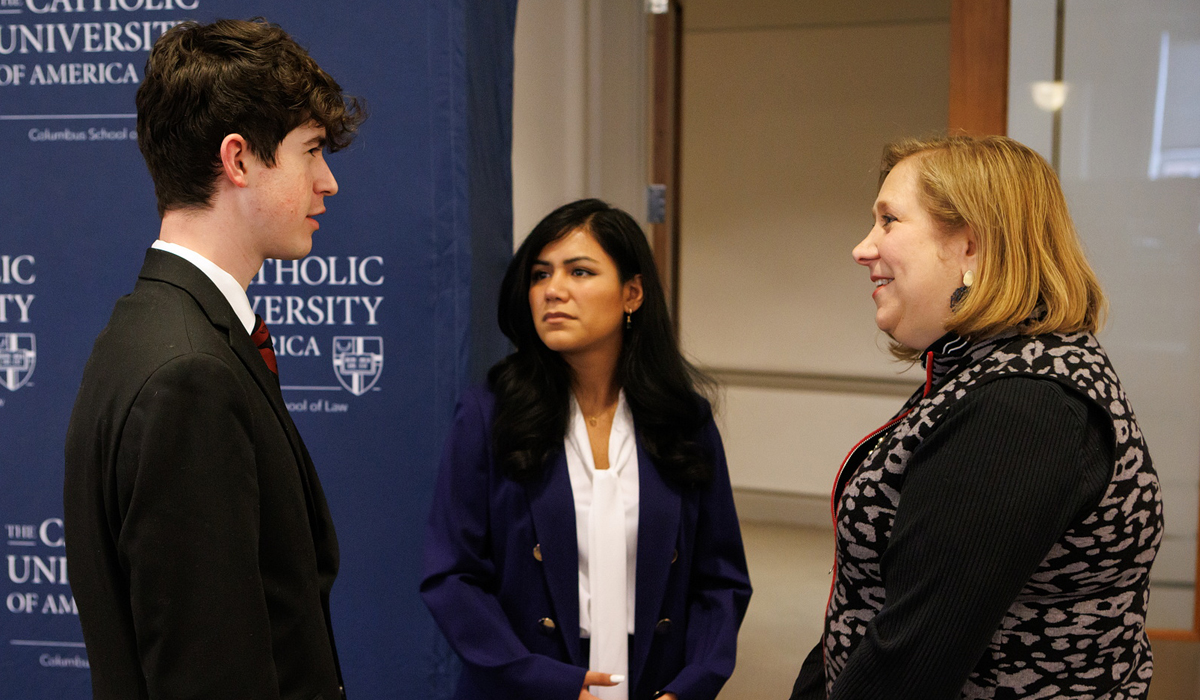 Despite these challenges, the ambassadors expressed hope for the future. They highlighted the importance of having this critical conversation with a large bipartisan audience, demonstrating that the fight against human trafficking remains a unifying issue. Their optimism stemmed from the shared commitment in the room to address these pressing concerns and work toward solutions.
The panelists urged policymakers to act decisively, calling for restored funding, independent leadership, and a renewed focus on prevention, protection, and prosecution. While the challenges are significant, they emphasized that collective action and determination can help reclaim America’s leadership in combating modern slavery.
For more details and to view a recording of this impactful discussion, see below.